A roof can look fine from the driveway while hidden moisture, worn flashing, lifted tiles, or aging underlayment are putting the home beneath it at risk. For South Florida owners, understanding roof replacement cost Florida pricing means looking beyond a single number. Your roof must stand up to intense sun, wind-driven rain, humidity, and hurricane-season exposure - and the right replacement should protect the home accordingly.
For a typical Florida home, a full roof replacement may range from roughly $15,000 to $60,000 or more. Smaller, straightforward shingle roofs can fall below that range, while large tile, metal, or complex roof systems can exceed it. The most dependable way to plan is with a detailed, on-site estimate that accounts for your roof’s size, condition, material, code requirements, and installation needs.
What Shapes Roof Replacement Cost in Florida?
Two homes with similar square footage can have very different roofing costs. A roof is measured by its actual surface area, not just the home’s living area. A 2,000-square-foot home with a steep pitch, multiple ridges, valleys, dormers, and covered patios may require considerably more material and labor than a simple low-slope structure.
Roofing contractors commonly measure in “squares,” with one square equal to 100 square feet of roofing surface. That measurement helps determine material quantities, labor, waste allowances, and disposal needs. It is one reason online cost calculators can provide only a broad starting point.
The existing roof also matters. If the roof has multiple layers to remove, deteriorated decking, damaged fascia, or concealed water intrusion, the project scope changes once those conditions are confirmed. A professional estimate should explain what is included, what may be discovered during tear-off, and how those conditions would be handled.
Roof Design and Access
Simple gable roofs are generally more efficient to replace than roofs with many changes in direction. Skylights, chimneys, solar equipment, rooftop HVAC components, and tight property access can add labor and coordination. Tile roofs may also require more careful handling because of their weight and installation method.
In South Florida, homes close together or surrounded by mature landscaping can require additional protection and cleanup planning. That preparation is part of a professional installation, not an afterthought.
Permits and Building Code Requirements
A roof replacement is not simply a material swap. Permitting, inspections, and Florida Building Code requirements are central to the project. Depending on the property and scope, the work may involve approved underlayment systems, flashing details, ventilation considerations, fastening requirements, and wind-resistant installation methods.
If deteriorated sheathing is found, replacement may be necessary to provide a sound surface for the new roof system. Some homes may also need improvements that support current code requirements or better storm performance. These items can affect the final cost, but they also address the details that help a roof perform when heavy rain and high winds arrive.
Typical Roof Replacement Cost Florida Material Ranges
The material you choose has a major effect on both upfront investment and long-term maintenance expectations. Pricing varies by manufacturer, color, profile, roof complexity, availability, and local labor conditions, but these broad installed ranges can help frame the conversation.
Asphalt shingles are often the most budget-conscious option for sloped residential roofs. Many Florida homeowners can expect a shingle replacement to fall around $4.50 to $8.50 per square foot, depending on the product and project conditions. Architectural shingles offer a more dimensional appearance than basic three-tab shingles and are a common choice for homeowners seeking value and dependable performance.
Metal roofing typically costs more initially, often in the range of $9 to $16 or more per square foot installed. It can offer a clean, premium appearance, strong longevity potential, and excellent suitability for Florida’s climate when designed and installed properly. The exact panel type, coating, attachment system, and roof geometry all matter.
Concrete or clay tile can range roughly from $10 to $20 or more per square foot installed. Tile brings distinctive curb appeal and can complement many South Florida architectural styles, but it is heavier and may require more labor-intensive installation. The condition and capacity of the roof structure should always be considered.
Low-slope roof systems, common on certain additions, modern homes, and multifamily properties, are priced differently than steep-slope shingle or tile roofs. Modified bitumen, TPO, and other membrane systems may run approximately $7 to $14 or more per square foot, depending on drainage conditions, insulation needs, penetrations, and detailing.
Material cost is not the whole story. A lower-priced roof covering installed with weak flashing, poor waterproofing details, or inadequate workmanship is not a value. The system beneath the visible surface is what helps direct water away from the home.
Costs That Are Easy to Miss
Homeowners often compare proposals based only on the visible roofing material. That can lead to surprises later. A complete proposal should account for removal and disposal of existing materials, underlayment, flashing, vents, edge metal, permits, inspections, delivery, site protection, and cleanup.
Decking replacement is one of the most common variable costs. It cannot always be confirmed until old roofing materials are removed. A clear contractor will identify the unit cost for any necessary sheathing replacement rather than burying the possibility in vague language.
Other possible additions include gutter work, chimney or wall flashing repairs, skylight replacement, ventilation improvements, and repairs to roof-to-wall connections. These are not automatically required on every project, but they should be evaluated because they affect how the complete roof system manages water and wind.
How Hurricane Risk Affects Your Investment
South Florida roofing decisions are shaped by more than appearance. A replacement roof is an opportunity to improve the home’s exterior protection at a critical time. Proper attachment, high-quality underlayment, sealed penetrations, and carefully installed flashing all play a role in reducing vulnerability to wind-driven rain.
Homeowners should also ask how the roof replacement fits into the home’s broader protection plan. A strong roof matters most when paired with protected openings. Hurricane-impact windows and doors can help reduce exposure at the home’s most vulnerable points while also supporting security, energy efficiency, and everyday comfort.
Insurance considerations can be part of this discussion, but savings are never guaranteed. Ask your insurer what documentation may be needed and whether specific roof materials, mitigation features, or impact-rated products affect your policy. Make decisions based first on protection, condition, and long-term property needs - not on an assumed premium reduction.
Getting an Estimate You Can Trust
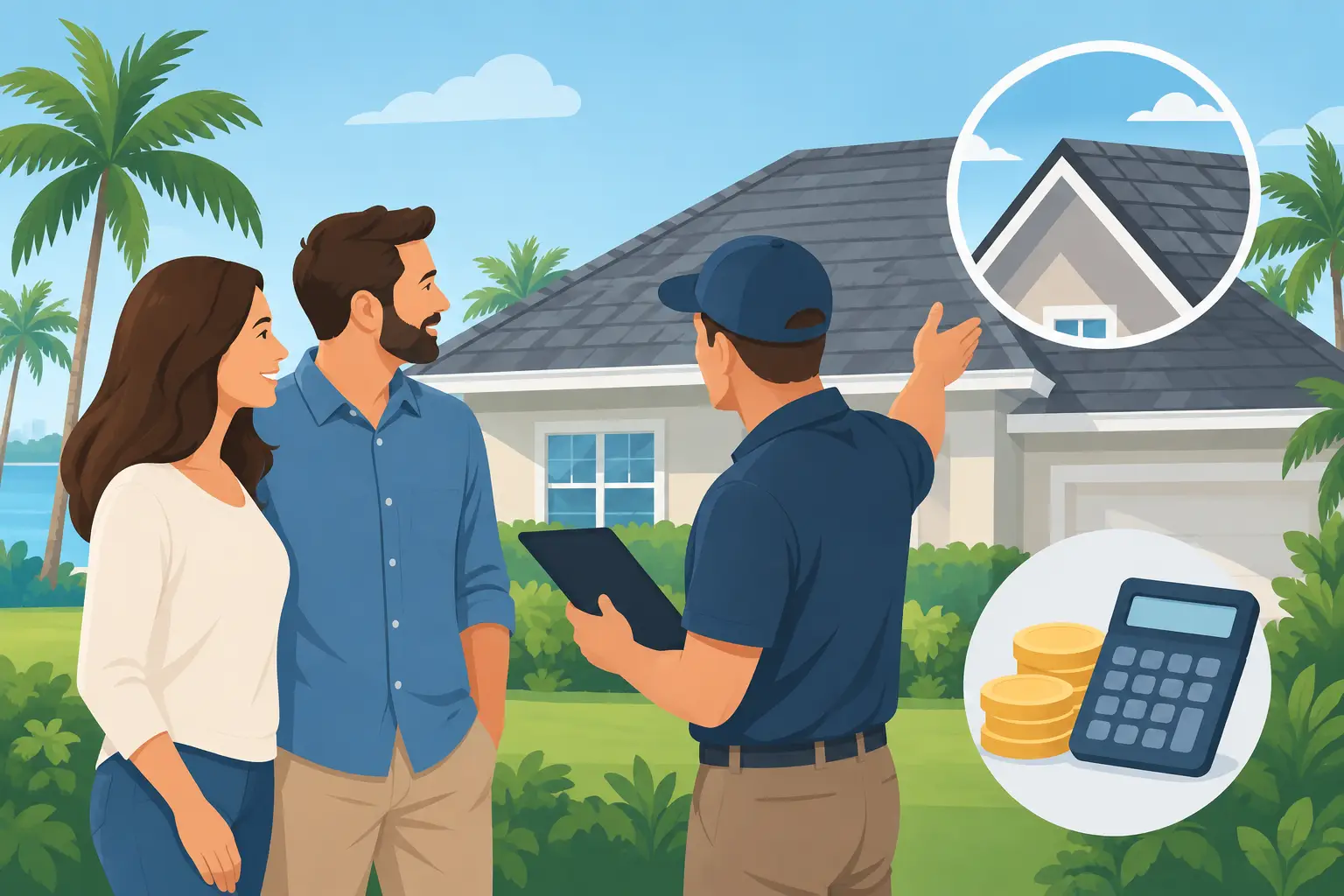
A useful roofing estimate should make it easier to compare value, not harder. Look for a contractor who visits the property, measures the roof, reviews visible concerns, and discusses material options in terms you can understand. The proposal should identify the roofing system, expected scope of work, permit process, and any allowances or conditions that could affect the final price.
Be cautious with unusually low bids. They may omit tear-off, permit fees, underlayment quality, flashing work, disposal, or code-related details. The lowest initial figure can become the highest-cost decision if the installation leaves the home exposed to leaks or premature repairs.
It is also reasonable to ask about licensing, insurance, manufacturer options, workmanship standards, project timing, and how the property will be protected during construction. A roof replacement is a significant project, and communication matters as much as materials.
Planning the Project Without Rushing It
If your roof is aging but not actively leaking, planning ahead gives you more control over material selection, budgeting, and scheduling. Waiting until water enters the home can turn a planned improvement into an urgent repair, especially during the rainy season or after a named storm.
If storm damage is suspected, document visible conditions promptly and review your insurance policy before making assumptions about coverage. Emergency protection may be needed, but a full replacement decision should be based on a professional assessment of the roof’s overall condition.
Florida Roof & Impact helps South Florida homeowners evaluate roofing needs with a protection-first approach, from material selection through a clear project plan. A detailed estimate can turn uncertainty about cost into a practical decision about safeguarding the home you have worked hard to build.